Artificial intelligence is driving an unprecedented wave of data center construction across the United States. As technology companies race to build larger, faster, and more powerful facilities, contractors face increasing challenges related to underground infrastructure, utility coordination, and excavation safety.
Hydro excavation has become a critical part of modern data center construction because it provides a safer, more precise method for locating and exposing underground utilities. For hyperscale campuses that require extensive fiber optic networks, electrical systems, cooling infrastructure, and utility corridors, hydro vac excavation helps reduce risk while supporting faster project completion.
Unlike traditional commercial developments, AI data centers require enormous amounts of power, connectivity, and cooling capacity. These facilities often span hundreds of acres and contain extensive underground infrastructure before a single server is installed.
Modern AI data centers demand:
Because these projects involve such dense utility networks, accurate utility locating and verification become essential before excavation begins.
The underground infrastructure supporting an AI data center is significantly more complex than that of a standard commercial building.
Common underground systems include:
Many hyperscale developments also require future utility expansion corridors, making precise utility mapping critical during construction.
Failure to identify existing utilities before excavation can lead to utility strikes, project delays, costly repairs, and safety hazards.
Before trenching or excavation begins, contractors must understand exactly what exists below the surface.
Utility locating helps identify:
The Federal Highway Administration recognizes utility locating and Subsurface Utility Engineering (SUE) as critical project-planning practices that help reduce utility conflicts, improve safety, and minimize costly construction delays.
Many projects combine Ground Penetrating Radar (GPR) with electromagnetic utility locating to provide a comprehensive understanding of underground conditions.
According to the Occupational Safety and Health Administration (OSHA), employers must determine the estimated location of underground installations before excavation begins. This requirement helps reduce the risk of utility damage and worker injury.
Locating utilities is only the first step.
Utility daylighting uses hydro excavation to physically expose underground utilities so contractors can verify their exact location, depth, and condition before construction proceeds.
This process is especially important on AI data center projects because underground utility corridors often contain:
Daylighting significantly reduces uncertainty and helps engineering teams make informed construction decisions.
AI data centers rely on extensive fiber optic connectivity to support cloud computing, machine learning workloads, and high-speed data transmission.
Fiber optic systems are particularly vulnerable during excavation because they are often:
Hydro excavation allows contractors to safely expose existing fiber lines without damaging surrounding infrastructure.
This level of precision helps protect communication networks while allowing crews to install new conduits and expansion pathways.
Cooling is one of the largest infrastructure requirements for AI facilities.
Many modern data centers use extensive cooling systems that depend on underground piping networks carrying:
These pipelines often coexist with electrical and communication infrastructure in congested utility corridors.
Hydro excavation enables crews to safely expose existing pipelines and install new cooling infrastructure with minimal disruption to surrounding utilities.
Utility strikes remain one of the most expensive and dangerous risks on large construction projects.
A damaged utility can result in:
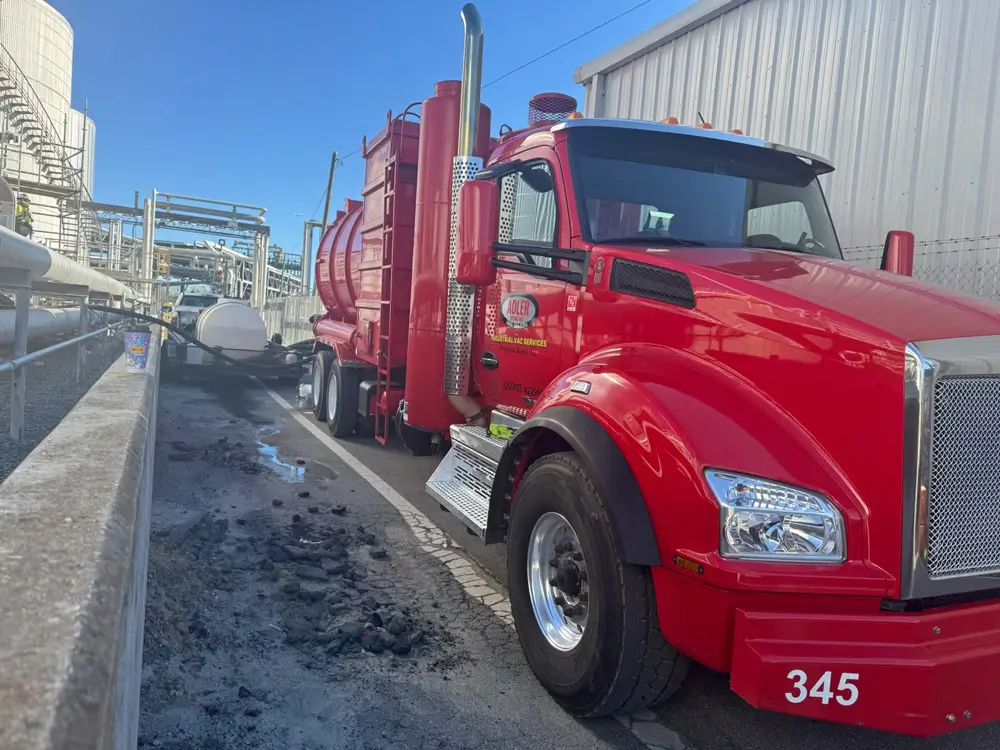
Hydro excavation reduces these risks by using pressurized water and vacuum technology rather than mechanical digging equipment.
Instead of blindly excavating around underground infrastructure, contractors can safely expose utilities with precision and control.
The Common Ground Alliance (CGA), a leading authority on damage prevention, consistently identifies utility locating, verification, and safe excavation practices as critical factors in reducing underground utility strikes.
Traditional excavation methods use backhoes, trenchers, and other mechanical equipment to remove soil.
While effective for bulk earthmoving, these methods create a greater risk of damaging underground infrastructure.
For utility-sensitive environments such as AI data centers, hydro excavation is often the preferred approach.
Hyperscale data centers represent investments worth hundreds of millions—or even billions—of dollars.
Developers cannot afford utility strikes, unexpected underground conflicts, or construction delays caused by inaccurate utility information.
Hydro vac excavation helps support project success by providing:
As AI-driven development continues to accelerate, hydro excavation will remain a critical component of data center construction, utility verification, and underground infrastructure management.
AI data centers require some of the most complex underground infrastructure found in modern construction. From fiber optic networks and electrical conduits to cooling water systems and utility corridors, these projects depend on accurate utility information before excavation begins.
By combining utility locating, daylighting, and hydro excavation, contractors can reduce utility strike risk, improve safety, and keep large-scale data center projects moving forward on schedule.
Contact Adler Hydro Vac today to learn how our utility locating, daylighting, and hydro excavation services can help protect critical infrastructure, minimize project delays, and support the successful delivery of your next AI data center project.
Hydro excavation safely exposes underground utilities using pressurized water and vacuum technology, reducing the risk of utility damage during construction.
Yes. Hydro excavation is commonly used around fiber optic infrastructure because it is a non-destructive excavation method that minimizes the risk of cable damage.
Common underground systems include fiber optic lines, electrical conduits, cooling water pipelines, sanitary sewer systems, storm drainage infrastructure, and communication networks.
In utility-dense environments, hydro excavation is generally considered safer because it allows crews to expose underground infrastructure with greater precision and less risk of accidental strikes.
Daylighting physically exposes underground utilities so contractors can verify location, depth, and condition before excavation begins, helping prevent costly conflicts and delays.