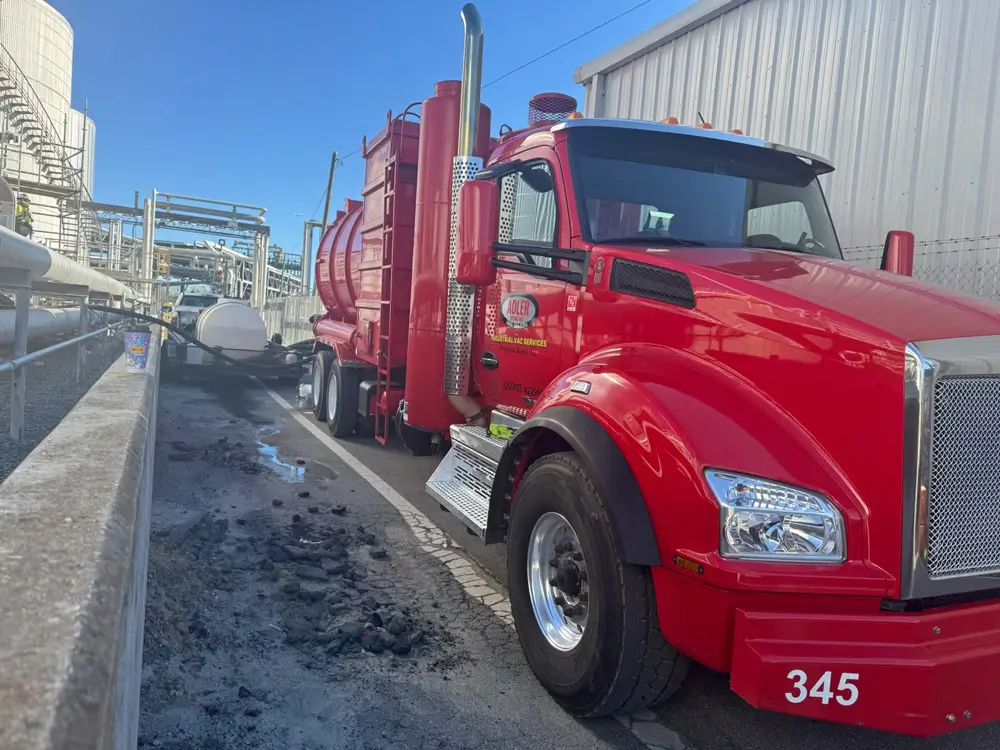
Hydro excavation is a non-destructive digging method widely used in energy distribution, utility locating, and underground infrastructure projects. By combining pressurized water with a powerful vacuum system, hydrovac excavation safely exposes buried utilities such as gas lines, electrical conduits, fiber optic cables, water mains, and communication infrastructure without damaging critical systems.
Compared to traditional mechanical digging, hydro excavation improves excavation accuracy, reduces utility strike risks, minimizes surface disruption, and enhances worker safety. Because of these advantages, hydro excavation is commonly used for utility locating, potholing, daylighting, trenching, underground utility exposure, maintenance work, and emergency utility repairs.
At Adler Hydro Vac, our hydro excavation services support utility contractors, municipalities, energy providers, pipeline contractors, and infrastructure projects that require safe underground utility locating and precise excavation solutions.
Hydro excavation, also known as hydrovac excavation or vacuum excavation, uses high-pressure water and industrial vacuum equipment to safely break apart and remove soil.
The process works by:
This non-destructive excavation method allows crews to safely expose underground utilities while minimizing the risk of damaging buried infrastructure.
Because the excavation process is highly controlled, hydro excavation is especially effective in congested underground utility corridors where traditional excavation equipment creates a higher risk of accidental utility strikes. The Common Ground Alliance’s damage prevention resources emphasize that careful utility exposure and safe excavation practices are critical for preventing underground infrastructure damage during construction and utility work.
Hydro excavation is commonly paired with utility daylighting services and vacuum excavation applications for utility verification before drilling, trenching, or directional boring begins.
Utility locating is one of the most important steps in any energy distribution or underground infrastructure project. Before excavation or construction begins, contractors must identify the exact location and depth of buried utilities to avoid costly and dangerous utility strikes.
Hydro excavation supports underground utility locating through a process called potholing or daylighting, where small, precise holes are excavated to visually confirm underground utility locations.
This process helps crews safely identify:
Compared to mechanical excavation, hydro excavation dramatically reduces the risk of damaging underground infrastructure during utility locating operations.
The national Call 811 Before You Dig program explains how utility marking requirements help contractors identify underground public utilities before excavation begins, reducing utility strike risks and improving excavation safety.
For projects involving dense underground infrastructure, many contractors also use non-destructive digging services to safely expose utilities in congested utility corridors.
Hydro excavation combines pressurized water with a high-powered vacuum system to safely excavate soil and expose underground utilities.
Hydrovac operators carefully control water pressure to safely loosen soil while protecting buried infrastructure. The resulting slurry is immediately vacuumed into a sealed debris tank for containment and disposal.
This controlled excavation process helps crews:
Hydro excavation is commonly used in urban utility corridors, energy infrastructure projects, industrial facilities, and utility maintenance operations where precision excavation is critical.
Many infrastructure contractors rely on hydrovac trenching services to create narrow, controlled excavations with minimal disruption to surrounding utilities and pavement.
Hydrovac trucks are specifically designed for underground utility locating and non-destructive digging applications. These systems combine high-pressure water with industrial vacuum equipment to safely remove soil around buried infrastructure.
Feature | Specification Range | Why It Matters |
Water Pressure | 2,000–3,000 PSI | Breaks up soil while protecting utility coatings |
Vacuum Suction | Up to 6,000 CFM | Handles heavy debris and deep excavation |
Boom Reach | Up to 24 feet | Allows excavation in tight or restricted areas |
Digging Depth | Up to 20 feet | Reaches deep underground utility corridors |
Water Tank Capacity | 200–1,200 gallons | Supports longer excavation runs |
Hydro excavation equipment is commonly used for:
Adler Hydro Vac also supports pipeline excavation projects where safe digging around buried gas and energy infrastructure is critical.
Hydro excavation plays a critical role throughout all phases of energy distribution and underground utility projects.
Potholing and daylighting are among the most common hydro excavation applications in utility locating projects.
Crews use hydrovac excavation to expose underground utilities before trenching, drilling, or construction begins. This helps confirm utility depth and alignment while reducing the likelihood of accidental utility strikes.
Hydro excavation is especially valuable for underground utility verification in congested infrastructure corridors. Many utility contractors use potholing services to safely verify utility locations before horizontal directional drilling and utility installation projects.
Hydro excavation is commonly used for slot trenching and narrow excavation work during energy distribution construction projects.
The precision of hydrovac excavation allows crews to:
Because hydro excavation removes only the necessary amount of soil, projects often require less backfill and surface restoration compared to traditional excavation methods.
Hydro excavation is also widely used for utility maintenance, underground infrastructure inspections, and emergency utility repairs.
When utility failures occur, crews can quickly expose buried infrastructure for inspection and repair without creating additional damage to nearby systems.
Hydrovac excavation is especially effective for:
OSHA’s excavation and trenching safety standards outline safety requirements for excavation work around underground infrastructure, trenching operations, and buried utilities.
Contractors often depend on emergency hydrovac services when rapid excavation and utility access are required after storms, utility failures, or pipeline emergencies.
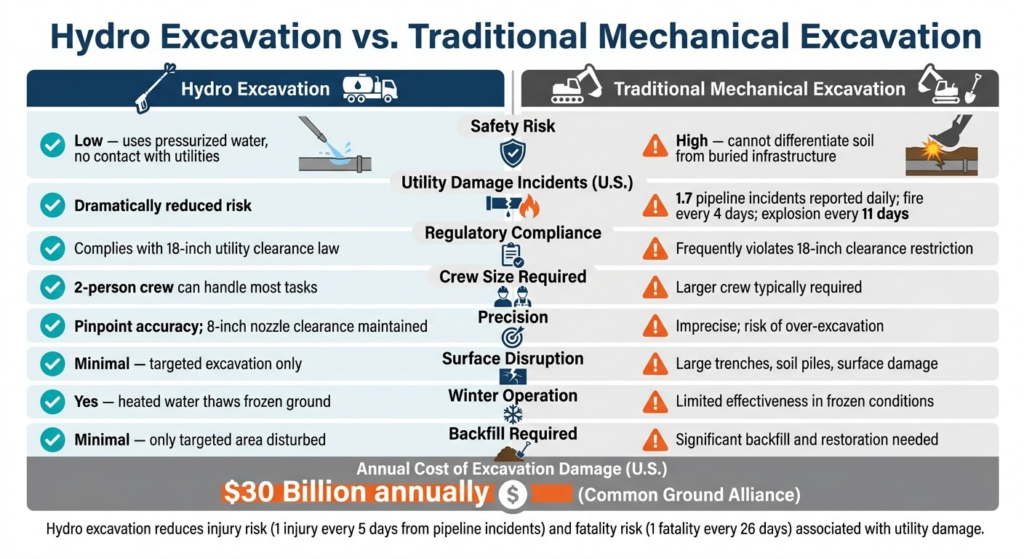
Hydro Excavation vs. Traditional Mechanical Excavation: Key Differences
One of the biggest advantages of hydro excavation is its ability to safely expose buried utilities without damaging critical infrastructure.
Traditional excavation equipment can accidentally strike:
Hydro excavation significantly lowers this risk because pressurized water is far less destructive than mechanical digging equipment.
The Pipeline and Hazardous Materials Safety Administration’s pipeline safety resources explain how excavation damage remains one of the leading causes of underground pipeline incidents across the United States.
Hydro excavation improves worker safety by reducing direct contact with underground utilities and minimizing trenching hazards.
Operators can excavate remotely using extended vacuum hoses and water lines, reducing exposure to:
The CDC’s workplace safety resources provide additional occupational safety guidance for excavation, utility construction, and underground infrastructure projects.
Hydro excavation often improves efficiency on energy distribution projects by:
Because hydro excavation combines excavation and debris removal into one process, projects can often move faster while avoiding costly underground utility damage.
Hydrovac excavation is especially effective for industrial excavation projects where downtime reduction and precise utility exposure are essential.
Hydro excavation creates significantly less disruption compared to traditional excavation methods.
Benefits include:
This makes hydro excavation especially valuable in urban utility corridors, industrial sites, and sensitive infrastructure environments.
Proper planning is essential before hydro excavation begins.
Contractors should contact 811 to identify underground public utilities and confirm excavation safety requirements before digging starts. Many crews also use white-lining, a process where white paint or flags outline the planned excavation area before utility locators arrive. This improves locating accuracy and helps reduce accidental utility strikes during excavation.
Depending on the project, additional private utility locating services may also be required.
Project planning should include:
Utility Type | Marking Color |
Natural Gas | Yellow |
Electrical Utilities | Red |
Communication Lines | Orange |
Water Systems | Blue |
Sewer Lines | Green |
Proper planning helps improve excavation safety, reduce project delays, and protect underground infrastructure throughout energy distribution projects.
Maintaining proper excavation techniques and pressure control is critical during hydro excavation around buried infrastructure.
Experienced hydrovac operators carefully adjust pressure levels based on soil conditions and utility proximity to safely expose underground systems while minimizing the risk of damage.
Crews may document:
Accurate documentation improves project efficiency, supports regulatory compliance, and provides valuable records for future maintenance and underground utility work.
OSHA’s trenching and excavation safety guidelines explain best practices for trench protection, excavation safety, and underground utility hazard prevention.
Maintaining safe water pressure levels is essential during hydro excavation around underground utilities.
Proper pressure control helps protect:
Experienced hydrovac operators adjust pressure settings based on soil conditions and utility proximity.
Energy distribution projects require experienced hydro excavation professionals who understand utility locating, excavation safety, and underground infrastructure protection.
Professional hydrovac operators help ensure:
Adler Hydro Vac provides professional hydrovac excavation services for energy distribution projects, underground utility locating, potholing, trenching, and non-destructive excavation applications.
Adler Hydro Vac provides professional hydro excavation, utility locating, potholing, trenching, and non-destructive digging services for energy distribution and underground utility projects.
Our hydrovac excavation services support:
With a focus on safety, precision, and efficiency, Adler Hydro Vac helps contractors and utility providers complete underground infrastructure projects while reducing utility strike risks and minimizing site disruption.
Hydro excavation has become an essential solution for modern energy distribution projects because it provides safe, precise, and non-destructive excavation around buried infrastructure.
From utility locating and potholing to trenching, emergency repairs, and underground utility exposure, hydro excavation helps contractors reduce utility strike risks, improve worker safety, minimize surface disruption, and complete projects more efficiently.
Compared to traditional mechanical digging, hydrovac excavation offers greater accuracy, safer excavation near buried utilities, lower restoration costs, and improved excavation efficiency across complex underground utility environments.
For professional hydro excavation, utility locating, potholing, and non-destructive digging services, Adler Hydro Vac provides experienced support for energy distribution projects, underground utility work, and infrastructure excavation.
Hydro excavation is ideal when projects require precise underground utility locating, non-destructive digging, or excavation near buried infrastructure such as gas lines, electrical conduits, fiber optic cables, and communication systems.
Utility potholing is a hydro excavation method used to safely expose underground utilities through small, controlled excavations. It helps verify utility depth and location before construction or trenching begins.
Hydro excavation improves utility locating by allowing crews to visually confirm underground utility locations without damaging buried infrastructure. This helps reduce utility strike risks and improves excavation accuracy.
Hydrovac slurry is collected in a sealed debris tank and transported to an approved disposal or treatment facility following local environmental and disposal regulations.
Hydro excavation uses pressurized water and vacuum recovery instead of destructive mechanical digging equipment. This non-destructive process significantly lowers the risk of damaging underground pipelines, electrical systems, communication lines, and other buried infrastructure.