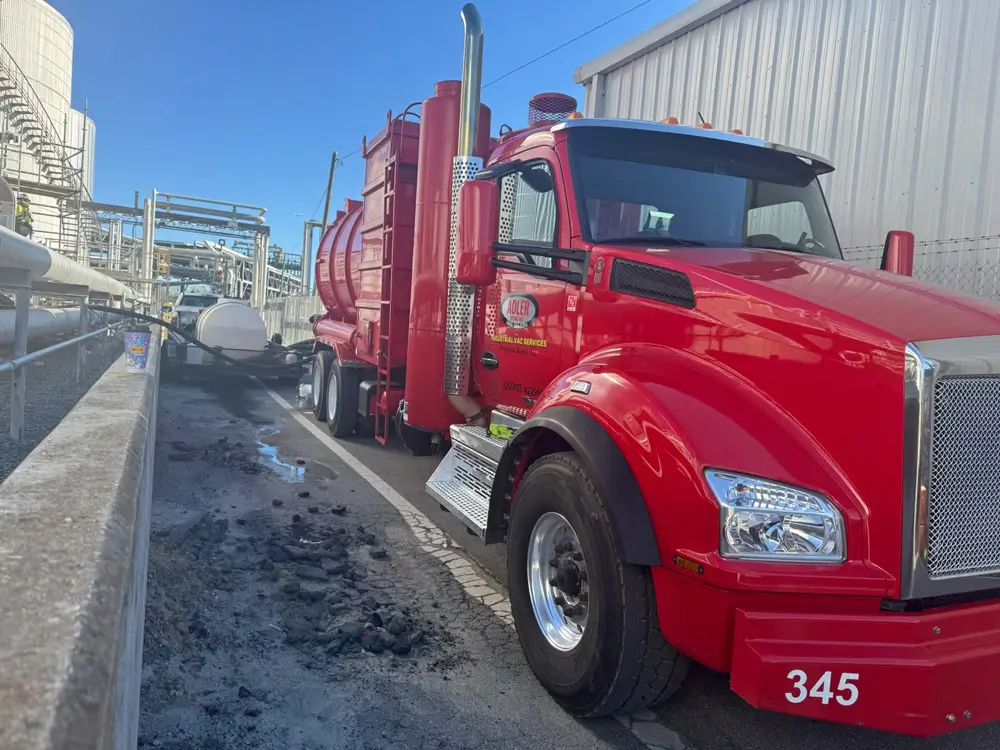
Hydro excavation is a safe, precise, and non-destructive method used for hazardous spill cleanup, including chemical spills, fuel leaks, contaminated soil removal, and industrial waste remediation. By combining pressurized water with a high-powered vacuum system, hydro excavation removes hazardous materials efficiently while minimizing damage to underground utilities and reducing environmental impact.
Compared to traditional excavation methods, hydro excavation provides greater precision, faster response times, improved worker safety, and significantly less site disruption. It is widely used in emergency spill response, environmental remediation, industrial cleanup, underground utility locating, and utility daylighting projects.
At Adler Hydro Vac, our hydro excavation services support safe and compliant hazardous spill cleanup for industrial facilities, utility contractors, municipalities, and environmental remediation projects.
Hazardous spill cleanup requires precision, containment, and speed. Hydro excavation is often selected because it allows crews to safely remove contaminated soil without disturbing surrounding infrastructure or spreading pollutants.
This method is especially effective in areas where spills occur near:
Because hydro excavation is non-destructive, it is ideal for sensitive environments where traditional mechanical digging could worsen contamination or cause utility damage. The EPA’s Hazardous Waste Management guidance explains how contaminated materials must be safely handled, transported, and disposed of during remediation projects.
Hydro excavation is also commonly used alongside utility locating and daylighting services to safely expose buried infrastructure before remediation begins.
Before hydro excavation begins, crews complete a detailed site assessment to identify risks and determine the safest cleanup approach. Proper planning reduces environmental impact while improving worker safety and excavation efficiency.
Every hazardous spill cleanup project begins with evaluating:
This assessment determines how excavation and containment will be performed safely. According to the EPA’s hazardous waste regulations, proper waste characterization is essential before contaminated material can be transported or disposed of.
For sites with buried infrastructure, contractors often combine spill cleanup with non-destructive excavation services to reduce the risk of utility strikes during remediation.
Hazardous environments require strict safety controls, including clearly defined exclusion zones and appropriate PPE such as:
Hydro excavation improves safety by allowing operators to remove contaminated soil remotely using vacuum hoses and water wands, reducing direct exposure to hazardous materials.
Preparation is another key part of the process. Before the hydrovac truck arrives, crews may uncover manholes, depressurize tanks, and clear access routes to improve response efficiency. OSHA’s HAZWOPER standards outline the required safety procedures for hazardous waste operations and emergency response projects.
Before excavation begins, contractors should also follow Call 811 utility locating procedures to reduce the risk of damaging underground infrastructure.
Hydro excavation combines controlled soil removal with immediate vacuum containment, making it one of the most effective methods for hazardous spill response and environmental remediation.
During excavation, pressurized water breaks apart contaminated soil and debris, creating a slurry that is immediately vacuumed into a sealed debris tank.
This process helps:
Hydro excavation is commonly used for:
Many industrial contractors also use vacuum excavation services for trenching, potholing, and exposing underground infrastructure in environmentally sensitive areas.
Once collected, all contaminated material remains sealed within the hydrovac debris tank throughout transport. This closed-loop system helps prevent:
Waste is then transported to approved treatment or disposal facilities in accordance with environmental regulations.
The National Response Center’s spill reporting and emergency response guidance explains how hazardous material releases are reported and managed during emergency cleanup operations.
Proper disposal and documentation are critical components of hazardous spill cleanup operations.
After excavation, contaminated soil may undergo evaluation to determine regulatory classification. This may include:
Hydro excavation improves compliance by capturing contaminated material immediately during excavation, reducing environmental exposure and contamination spread.
The EPA’s Superfund remediation program provides additional guidance on contaminated site cleanup and long-term environmental remediation standards.
Hazardous spill cleanup must comply with multiple regulatory frameworks, including:
The Pipeline and Hazardous Materials Safety Administration’s hazardous materials transportation requirements outline federal safety standards for transporting contaminated waste and hazardous materials.
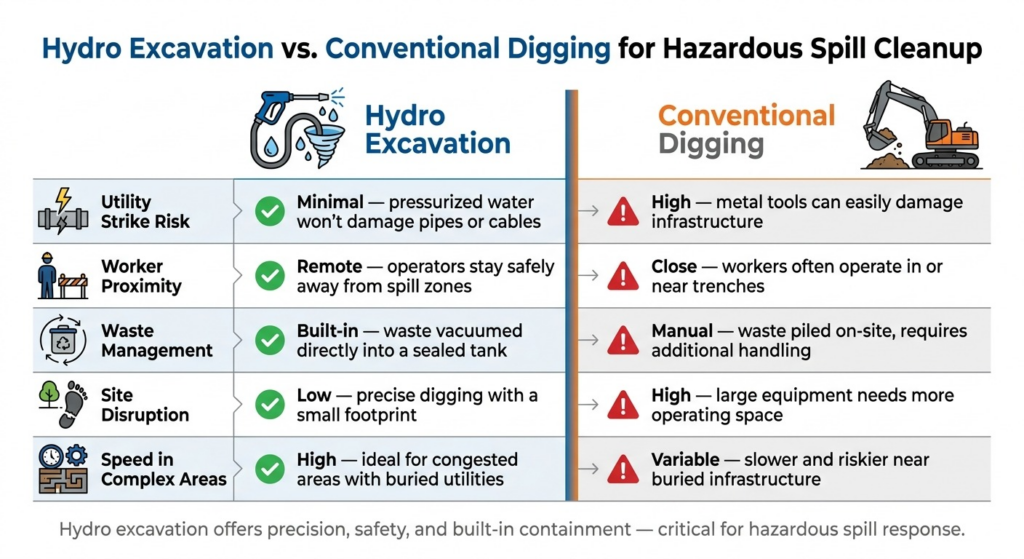
Hydro Excavation vs. Conventional Digging for Hazardous Spill Cleanup
Hydro excavation allows crews to remove only contaminated material while leaving surrounding soil and underground infrastructure intact.
This targeted excavation approach is especially useful for utility exposure and daylighting projects performed before remediation begins.
Because hydro excavation is highly precise, it also reduces restoration costs, minimizes unnecessary digging, and helps protect nearby infrastructure from accidental damage.
By removing the need for direct manual digging in contaminated zones, hydro excavation significantly reduces worker exposure to hazardous substances.
The process also helps control airborne dust and vapor release during excavation. NIOSH’s workplace safety resources provide additional guidance on reducing occupational exposure to hazardous materials during environmental cleanup operations.
Hydro excavation streamlines cleanup by combining excavation, vacuum recovery, and containment into a single process.
This helps crews:
Many municipalities and industrial contractors rely on emergency hydro excavation services to respond quickly to spills, underground utility emergencies, and contaminated excavation sites.
Feature | Hydro Excavation | Conventional Digging |
Utility Strike Risk | Low | High |
Worker Exposure | Reduced | Higher |
Waste Handling | Sealed containment | Open handling |
Site Disruption | Minimal | Significant |
Precision | High | Moderate |
Hydro excavation has become a leading method for hazardous spill cleanup because it combines precision, safety, and environmental control into a single process.
Whether responding to chemical spills, fuel leaks, industrial contamination, or environmental remediation projects, hydro excavation allows crews to safely remove hazardous materials while protecting workers, underground utilities, and surrounding ecosystems.
By using controlled excavation and immediate vacuum containment, hydro excavation helps organizations meet regulatory requirements while completing cleanup projects more efficiently and with less environmental disruption.
For professional hydro excavation and hazardous spill cleanup services, Adler Hydro Vac provides expert support for industrial, municipal, utility, and environmental remediation projects.
Hydro excavation may not be suitable in extremely unstable soil conditions, oversaturated ground, or environments where excavation could compromise site stability. A full site assessment is required before use.
Contaminated soil may be tested for ignitability, corrosivity, reactivity, and toxicity using laboratory analysis and field screening to determine proper disposal methods. The EPA’s hazardous waste identification guidelines explain how hazardous waste is classified and managed.
Secondary contamination is prevented using containment booms, absorbent materials, controlled excavation zones, and sealed vacuum recovery systems that immediately contain all removed material.