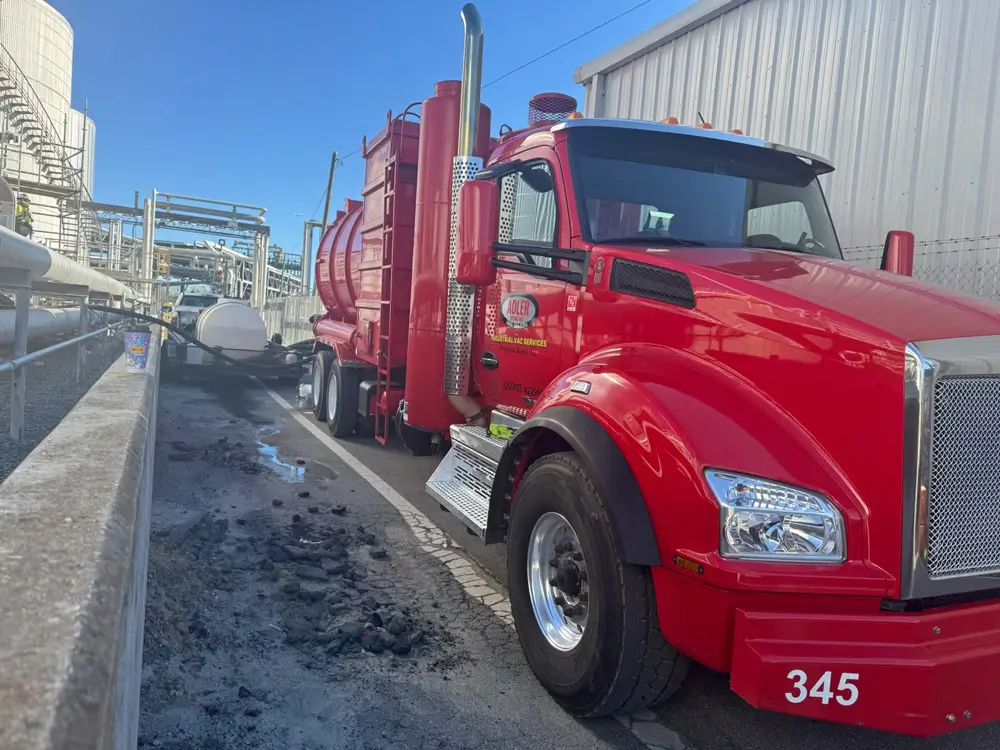
Hydro excavation is one of the most effective methods for oil spill cleanup, hazardous spill response, contaminated soil removal, and environmental remediation. Also known as hydrovac excavation or vacuum excavation, this non-destructive digging method uses pressurized water and a powerful vacuum system to safely remove contaminated soil, sludge, petroleum products, and hazardous materials while minimizing damage to surrounding infrastructure and ecosystems.
Compared to traditional excavation methods, hydro excavation provides more precise cleanup, improves worker safety, reduces environmental disruption, and lowers the risk of damaging underground utilities and pipelines. It is commonly used for pipeline leak cleanup, refinery spill response, fuel spill remediation, industrial vacuum services, and emergency environmental cleanup projects.
At Adler Hydro Vac, our hydro excavation services support oil spill cleanup, utility-safe excavation, industrial cleaning, hazardous material removal, and environmental restoration projects throughout complex industrial and utility environments.
Hydro excavation is a non-destructive excavation process that combines high-pressure water with a high-powered vacuum system to safely excavate soil and debris. During oil spill cleanup and environmental remediation projects, hydrovac excavation allows crews to precisely remove petroleum-contaminated soil while protecting underground infrastructure and reducing ecological impact.
The process works by using pressurized water to loosen soil and contaminated material while an industrial vacuum immediately transfers the resulting slurry into a sealed debris tank for containment and disposal.
Hydro excavation is commonly used for:
Because hydro excavation is highly controlled and precise, it is especially effective in congested underground utility corridors, industrial facilities, refineries, fuel terminals, and environmentally sensitive areas.
Many contractors combine vacuum excavation services with non-destructive digging methods to safely expose underground infrastructure before contaminated soil removal begins.
Hydro excavation provides targeted oil spill cleanup by removing only the contaminated material instead of unnecessarily disturbing large sections of surrounding soil.
This precision helps:
Unlike traditional mechanical excavation equipment, hydrovac excavation allows crews to safely uncover underground pipelines and buried utilities without damaging surrounding infrastructure.
Hydrovac excavation is commonly used alongside pipeline excavation services during oil and gas remediation projects where utility-safe excavation is critical.
Oil spill response environments can expose workers to hazardous chemicals, unstable excavation areas, and underground utility risks. Hydro excavation improves safety because operators can perform excavation remotely using water wands and vacuum hoses instead of placing workers directly inside hazardous excavation zones.
This helps reduce:
OSHA’s Hazardous Waste Operations and Emergency Response (HAZWOPER) standards establish federal safety requirements for hazardous waste cleanup, spill response operations, and worker protection during environmental remediation projects.
Additional occupational safety guidance from the CDC’s workplace safety resources highlights the importance of limiting worker exposure to hazardous materials, excavation hazards, and airborne contaminants during industrial cleanup operations.
Traditional excavation equipment can accidentally damage underground pipelines, electrical conduits, communication lines, and utility systems during spill cleanup operations.
Hydro excavation significantly lowers this risk because pressurized water safely loosens soil without using destructive mechanical digging equipment.
This makes hydro excavation ideal for excavation around:
The Pipeline and Hazardous Materials Safety Administration’s pipeline safety program explains how excavation damage remains one of the leading causes of underground pipeline incidents and hazardous material releases across the United States.
Hydro excavation is frequently used for utility daylighting services to visually verify buried infrastructure before excavation begins near pipelines and underground utility corridors.
Hydro excavation minimizes surface disruption and ecological damage compared to conventional excavation methods. Because crews remove only targeted contaminated material, there is less soil displacement, lower erosion risk, and reduced damage to vegetation and nearby waterways.
This controlled excavation process is especially valuable during:
Hydrovac excavation also helps reduce the spread of hazardous materials into surrounding groundwater or stormwater systems.
Many environmental contractors rely on industrial hydrovac services for refinery maintenance, tank farm cleanup, and contaminated excavation projects that require minimal environmental disruption.
Before hydro excavation begins, environmental response teams perform a detailed site assessment to determine the size of the spill, the type of petroleum contamination, soil conditions, nearby waterways, underground utility locations, and environmental risks.
Proper spill containment is critical for preventing oil and hazardous materials from spreading into nearby storm drains, groundwater, or environmentally sensitive areas.
Vacuum trucks are often deployed immediately to recover standing liquids and prevent contaminants from spreading further underground. Rapid spill response helps reduce environmental impact and supports faster remediation timelines.
The EPA’s oil spill prevention and preparedness resources explain federal spill response requirements, containment procedures, and environmental protection standards for petroleum releases and hazardous material incidents.
Once spill containment measures are established, crews prepare hydro excavation equipment and implement safety procedures for the cleanup operation.
Preparation may include:
Depending on site conditions, workers may use chemical-resistant suits, gloves, respirators, eye protection, and other PPE designed for hazardous spill cleanup environments.
OSHA’s trenching and excavation safety guidelines outline best practices for excavation safety, underground utility protection, and trench hazard prevention during environmental cleanup operations.
Additional occupational safety guidance from the CDC’s NIOSH workplace safety resources emphasizes proper PPE use and hazard monitoring in contaminated industrial environments.
Many contractors also use potholing services before excavation to safely verify underground utility locations near spill sites and industrial infrastructure.
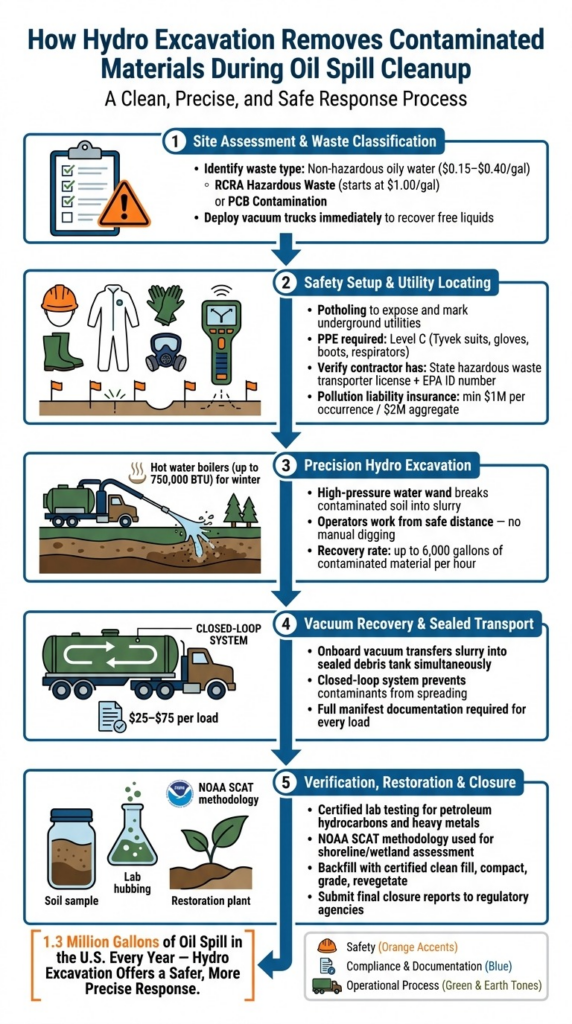
During the hydro excavation process, operators use pressurized water to safely break apart petroleum-contaminated soil and sludge. At the same time, a high-powered industrial vacuum immediately removes the resulting slurry and transfers it into a sealed debris tank.
This combined excavation and vacuum recovery process helps crews:
Because the process is highly controlled, hydro excavation is commonly used for pipeline leak cleanup, refinery remediation, tank farm cleanup, and industrial spill response projects.
Hydro excavation is also frequently used for emergency hydrovac services during active spills, underground utility failures, and urgent environmental remediation work.
As contaminated slurry is collected inside the hydrovac debris tank, the material remains fully contained throughout transport and disposal.
This closed-loop system helps prevent:
Once excavation is complete, crews transport contaminated waste to approved disposal or treatment facilities following hazardous waste regulations and environmental compliance standards.
The EPA’s hazardous waste management guidelines explain how hazardous materials must be properly identified, transported, stored, and disposed of during environmental cleanup projects.
After contaminated material is removed, environmental testing confirms that the cleanup meets regulatory standards and remediation goals.
Testing may include:
The EPA’s Superfund cleanup program outlines remediation standards and environmental restoration procedures used during contaminated site cleanup and hazardous waste remediation projects.
Once verification is complete, crews restore the site using clean fill material, grading, erosion control measures, and revegetation as needed.
Because hydro excavation’s precision minimizes unnecessary soil disturbance, restoration costs are often lower compared to traditional excavation methods.
Documentation throughout the cleanup process may include:
Restoration Phase | Key Activities | Documentation Required |
Verification | Soil sampling, lab analysis, regulatory check | Lab results, verification certificates |
Physical Restoration | Backfilling, compaction, grading, revegetation | Fill material receipts, compaction tests |
Closure | Final inspection, equipment decontamination | Closure reports, waste manifests |
Maintaining detailed documentation helps support environmental compliance and confirms the safe handling and disposal of hazardous materials.
Hydro excavation has become a trusted solution for oil spill cleanup because it combines precision, speed, safety, and environmental protection into one efficient process.
Whether responding to a pipeline leak, refinery spill, fuel release, or contaminated soil event, hydrovac excavation allows crews to safely remove hazardous materials while minimizing environmental disruption and protecting underground utilities.
Compared to traditional excavation methods, hydro excavation offers:
For safe and efficient hydro excavation services, Adler Hydro Vac provides expert support for oil spill cleanup, environmental remediation, industrial vacuum services, and utility-safe excavation projects.
Hydro excavation is used to safely remove petroleum-contaminated soil, expose underground pipelines, recover hazardous materials, and support environmental remediation during oil spill cleanup projects.
It is commonly used for:
Because hydro excavation is non-destructive, it minimizes environmental impact while improving cleanup precision and worker safety.
Hydro excavation is often safer and more precise than traditional mechanical digging during hazardous spill cleanup operations.
Instead of using heavy excavation equipment, hydrovac excavation uses pressurized water and vacuum recovery to safely remove contaminated soil while reducing the risk of:
This makes hydro excavation especially effective around underground pipelines, utility corridors, and environmentally sensitive areas.
During hydro excavation, contaminated soil, sludge, oil, and liquids are vacuumed into a sealed debris tank on the hydrovac truck.
The material is then transported to approved disposal or treatment facilities following environmental regulations and hazardous waste handling requirements.
Proper containment and disposal help prevent secondary contamination and protect surrounding soil and groundwater.
Oil spill cleanup projects require strict safety procedures to protect workers, nearby infrastructure, and the environment.
Common safety measures include:
The National Response Center’s spill reporting and emergency response procedures explain federal reporting requirements for oil spills, hazardous material releases, and environmental emergencies.