Industrial cooling towers and drains are critical for smooth operations in manufacturing, power plants, and processing facilities. Over time, contaminants like biofilm, mineral scale, algae, and debris accumulate, reducing efficiency, increasing energy costs, and risking equipment failure. Regular cleaning is essential to prevent these issues and avoid costly downtime.
Regular maintenance, using advanced cleaning methods and strict safety protocols, keeps systems efficient, reduces costs, and prevents unexpected shutdowns.
Industrial cooling towers are constantly exposed to water, air, and other environmental factors, which makes them a prime spot for contaminants to accumulate. Over time, these contaminants can seriously impact the system’s efficiency and reliability.
Biofilm is a persistent problem in cooling towers. This slimy layer, made up of bacteria, fungi, and other microorganisms, forms quickly on surfaces and acts like an insulating blanket, reducing heat transfer efficiency. Even more concerning, biofilm can harbor harmful bacteria like Legionella, which poses health risks to workers and nearby communities.
Mineral scale develops when minerals like calcium carbonate, calcium sulfate, and magnesium compounds in the water solidify and form deposits. As water evaporates, the concentration of these minerals increases, leading to hardened buildup, especially in regions with hard water. These deposits can clog systems and reduce efficiency.
Algae growth thrives in cooling towers exposed to sunlight and warm temperatures. Algae can coat surfaces, clog spray nozzles, and increase the biological oxygen demand in the water, providing nutrients for further microbial growth.
Solid debris such as dust, pollen, leaves, and industrial particles often finds its way into cooling towers. This debris can block flow paths and create surfaces where microorganisms can grow.
Corrosion byproducts, including rust and degraded pipe materials, circulate through the system. These particles not only wear down mechanical components but also create additional surfaces for biofilm to develop.
Each type of contaminant brings its own challenges, but together they can create a cascade of operational issues.
Contaminants in cooling towers don’t just sit idly – they actively disrupt operations. Biofilm and scale act as insulators, reducing the efficiency of heat exchange surfaces. This forces equipment to work harder, driving up energy costs.
Contamination also accelerates wear and tear on components. Localized hot spots and corrosion caused by deposits can lead to equipment failures, leaks, and other costly repairs. Additionally, clogged spray nozzles, blocked drain lines, and restricted flow paths can severely limit the system’s performance, especially during periods of high demand.
To make matters worse, biofilm and other deposits can interfere with water treatment chemicals, making it harder to protect the system from further damage. Over time, what starts as a minor issue – like a thin layer of biofilm – can grow into a thick, stubborn buildup that is difficult and expensive to remove.
Addressing these contaminants early is essential to avoid escalating problems. Effective cleaning and maintenance strategies can help reduce operational risks and protect the long-term health of cooling tower systems.
Before diving into cleaning operations, it’s crucial to follow established safety and procedural guidelines. These steps not only protect workers but also prevent equipment damage and ensure compliance with environmental regulations. A well-organized plan that balances operational needs with safety measures sets the stage for effective maintenance.
Start by completely isolating the cooling tower system from all energy sources. This means shutting down pumps, fans, and automated controls to eliminate any chance of an accidental restart during maintenance. Following OSHA‘s lockout/tagout procedures is essential to prevent unexpected energy activation.
Use approved lockout devices to secure all energy isolation points, including electrical disconnects, valve controls, and pneumatic systems. To enhance safety, each worker involved in the cleaning process should apply their own lock. This ensures that no one can restore power while work is underway. Tags attached to these locks should clearly identify the responsible worker, along with the date, time, and the anticipated duration of the work. Keeping a master log of active lockouts can help coordinate activities, especially during shift changes.
Before proceeding, a qualified individual must verify that the system is fully isolated. This includes checking all valves, releasing residual pressure, and using tools like a voltmeter to confirm there’s no active energy.
Once isolation is confirmed, attention can shift to water and sludge removal.
With the system safely shut down, the next step is managing the removal of water and sludge. Cooling towers can hold thousands of gallons of water, often mixed with sludge and contaminants. Simply draining this material into a storm sewer or onto the ground is not an option – it could lead to environmental violations and hefty fines.
Facilities must determine whether the water being removed is hazardous or non-hazardous before choosing a disposal method. In many situations, hiring a specialized liquid vacuum truck is the safest way to remove, transport, and dispose of sludge and contaminated water.
For systems with heavy contamination, it’s wise to establish containment measures around drain openings. Tools like berms, absorbents, and collection tanks help control spills. Staying compliant with federal, state, and local regulations is non-negotiable, and collaborating with environmental waste management experts can streamline this process.
Stormwater management is another critical consideration during cleaning. Rain can mobilize contaminants and overwhelm containment systems, so monitoring weather forecasts is essential. Temporary covers can help prevent runoff from reaching storm drains. Additionally, regular maintenance of stormwater systems, such as cleaning catch basins and performing line jetting, reduces the risk of blockages or uncontrolled discharges.
By addressing these factors, you can ensure a smoother, more efficient cleaning process.
Cleaning cooling towers and drains comes with risks like slips, falls, and exposure to hazardous substances. Proper personal protective equipment (PPE) is a key line of defense for worker safety.
Chemical-resistant gloves made of nitrile or neoprene are essential for handling cleaning agents. For eye protection, safety glasses with side shields are a good start, but full-face shields offer better defense, especially when working with high-pressure systems or chemicals. Emergency eyewash stations should also be easily accessible near the work area.
Respiratory protection may be necessary depending on the conditions inside the cooling tower. In poorly ventilated spaces, harmful vapors and bioaerosols can build up. Conduct air monitoring before entry to determine if respirators, such as N95 masks or higher-grade options, are needed. This is particularly important when dealing with contaminants like Legionella.
Protective clothing, such as coveralls or chemical-resistant suits, minimizes skin exposure to hazardous materials. Workers should also wear steel-toed, slip-resistant boots to prevent injuries from falling objects or slippery surfaces. For tasks in elevated or confined spaces, full-body harnesses and secure anchor points are a must.
Safety goes beyond gear – it also requires proper training and clear communication. Pre-job safety briefings ensure that every team member understands the risks, knows how to use PPE correctly, and is prepared for emergencies. In challenging or confined work environments, two-way radios and regular check-ins help maintain clear communication.
With these safety measures in place, facilities can confidently move forward with advanced cleaning techniques outlined in the next section.
Once safety measures are in place and the system is properly isolated, the actual cleaning process can begin. Effective maintenance of industrial cooling towers requires targeted techniques to address buildup, which can vary depending on the type, severity, and design of the tower, as well as operational constraints. These methods set the stage for subsequent extraction and chemical treatment steps.
High-pressure water cleaning is a mechanical method that effectively removes deposits from cooling tower surfaces. Using powerful water jets, this technique clears scale, biofilm, and debris from tower components and clogged fill media, which often accumulate sediment and biological growth that reduce heat transfer efficiency. It’s also useful for cleaning basins and sumps, where heavy sludge tends to collect during regular operation. Heated water can even be used to dissolve oils and grease when necessary.
One of the advantages of this method is its environmental friendliness. By avoiding the use of hazardous chemicals, it reduces the risk of harmful byproducts. Additionally, the resulting wastewater is often filtered and treated on-site, making the process more sustainable.
After the deposits are loosened, it’s crucial to remove the debris efficiently to ensure the cleaning process is complete.
While high-pressure water cleaning breaks down and loosens contaminants, truck-mounted vacuum systems handle the extraction of the resulting sludge and debris. These systems can manage both wet and dry materials with impressive efficiency, even reaching areas that are hard or unsafe for workers to access.
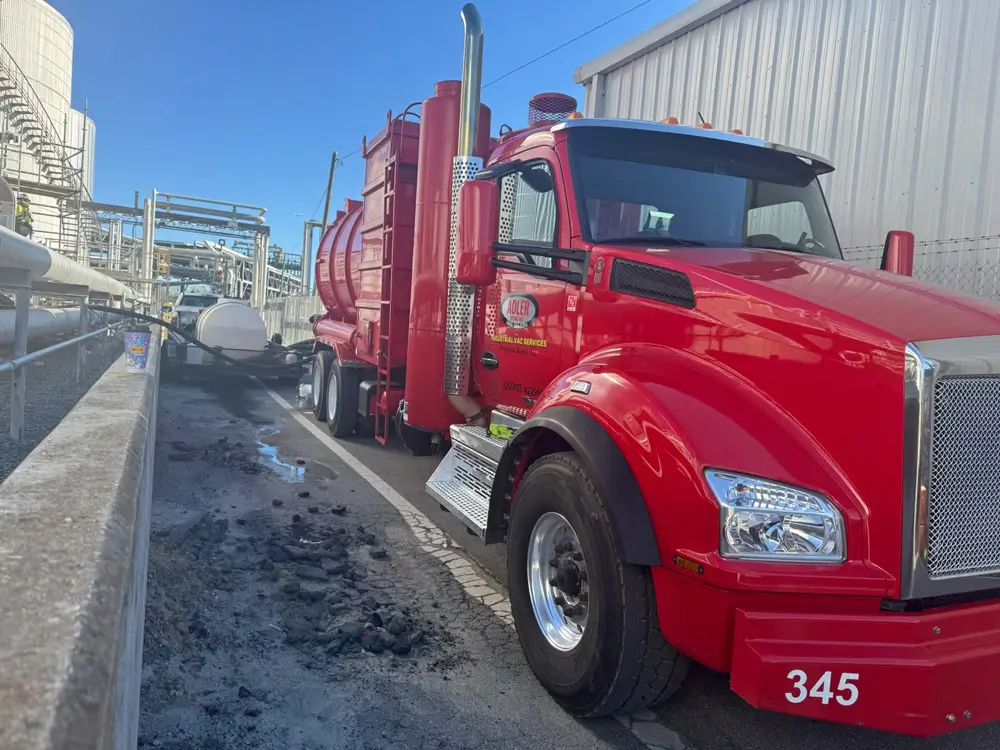
Adler Hydro Vac’s fleet of industrial vacuum trucks demonstrates the advantages of advanced technology in this field. These trucks can hold up to six times more material than standard equipment, reducing the number of trips required and speeding up project timelines. For large cooling towers containing thousands of gallons of contaminated water and sludge, this increased capacity can significantly cut down cleaning time.
Another major benefit of these vacuum systems is their versatility. They handle different materials throughout various cleaning stages, from removing standing water mixed with solids during the initial drainage to extracting the loosened sludge after mechanical cleaning.
“Adler’s vacuum trucks deliver a full range of commercial and industrial vacuuming services.”
Sump cleaning, in particular, is a challenging task. These areas often accumulate dense layers of sediment, rust particles, and biological material. Vacuum systems perform this task far more efficiently than manual methods, reducing worker exposure to hazardous materials and minimizing the risk of spills during transport.
For more stubborn deposits, chemical cleaning serves as a necessary complement to mechanical methods.
While mechanical cleaning removes the majority of deposits, certain contaminants – like tough scale buildup, mineralization, or biofilm – require chemical treatments for complete removal. Acid-based solutions are commonly used to dissolve mineral scale, with the choice of chemical agent tailored to the type of deposits and the materials used in the cooling tower’s construction. This process requires careful control of chemical concentration, exposure time, and temperature, along with continuous monitoring to ensure safety and effectiveness.
Dispersants and surfactants are often added to aid in rinsing off residual deposits. To finish, a disinfection step – commonly using chlorine-based compounds – eliminates any remaining microorganisms, which is critical for controlling pathogens such as Legionella.
Safety is a top priority during chemical cleaning. All chemicals must be handled according to their Safety Data Sheets, and workers should use appropriate personal protective equipment and ensure proper ventilation. Additionally, the neutralization and disposal of cleaning solutions must comply with local regulations.
In many cases, combining high-pressure water cleaning with targeted chemical treatments yields the best results. Mechanical methods quickly remove most deposits, while chemical treatments tackle the more stubborn residues. This combined approach helps maintain equipment performance while minimizing downtime.
Keeping cooling tower systems running smoothly isn’t just about cleaning the towers themselves – it also involves maintaining drain systems and managing wastewater. Ignoring these areas can lead to serious issues like blockages, environmental fines, and operational downtime. These processes work hand-in-hand with other cleaning methods to ensure the entire system is properly maintained.
Drain lines in cooling tower facilities often collect sludge, scale particles, biological growth, and sediment. Over time, these buildups can restrict water flow, leading to blockages, corrosion, and even bacterial growth.
To tackle this, industrial vacuum services are used to remove accumulated sludge and debris. Wet and dry vacuuming methods are particularly effective for hard-to-reach areas like underground drains. For tougher blockages, high-pressure water jetting (also known as hydro blasting) is the go-to solution. Operating at pressures between 5,000 and 40,000 psi, this method breaks down compacted material and flushes it out for easy vacuum extraction. This approach also minimizes safety risks by reducing the need for workers to enter confined spaces or handle contaminated materials directly.
In more complex systems with multiple towers, specialized drain cleaning services are essential to maintain pipe integrity and prevent backflow issues. Companies with decades of experience in industrial cleaning – some with over 40 years in the field – are well-equipped to handle these challenges.
Regularly scheduled drain maintenance, tailored to the facility’s water quality and usage patterns, is key to keeping flow rates consistent and avoiding sudden failures during critical operations. Once the drain lines are clear, attention shifts to managing the wastewater generated during the cleaning process.
After clearing out sludge and debris, the next step is managing the contaminated water in a way that complies with environmental regulations. This wastewater often contains dissolved minerals, chemical residues, biological matter, and, in some cases, hazardous substances.
Liquid vacuum trucks are commonly used to safely remove industrial sludge, oil, and other waste materials. These trucks are equipped to handle large volumes while ensuring effective containment during transport.
Compliance with local, state, and federal regulations is non-negotiable in wastewater management. Partnering with service providers who specialize in environmental compliance ensures that waste streams are properly classified and routed to the appropriate treatment or disposal facilities.
“Commitment to high safety standards and regulatory compliance in all operations.” – Adler Hydro Vac
The disposal process depends on the wastewater’s composition. Non-hazardous water, such as cooling tower blowdown, can often be treated on-site or sent to facilities equipped to handle industrial discharge. Hazardous materials, on the other hand, require specialized handling, thorough documentation, and disposal at approved sites. A reliable service provider manages this entire process, ensuring waste is handled responsibly from start to finish.
For facilities with frequent cleaning schedules, on-site waste management solutions can simplify the process. Temporary containment systems, filtration equipment, or treatment units can reduce the volume of waste sent off-site, potentially cutting costs while staying compliant with regulations.
Accurate record-keeping is another critical component. Logging wastewater volumes, classifications, and disposal receipts not only ensures compliance but also helps identify areas for improving efficiency.
Safety is paramount during wastewater collection and disposal. Workers must be properly trained and certified, especially when dealing with hazardous materials. This ensures both worker safety and environmental protection.
“Our team is properly trained and certified to complete any task with minimum risks and maximum efficiency.” – Adler Hydro Vac
Proper wastewater management is more than a legal requirement – it’s an investment in your facility’s reputation and operational reliability. By integrating wastewater handling into your overall cooling tower maintenance plan, you can avoid costly penalties, prevent environmental damage, and show a commitment to responsible practices. Facilities that prioritize this aspect of maintenance enjoy smoother operations and fewer unexpected complications.
Once the cleaning process is complete and waste has been removed, the next step is to restart the cooling tower system safely and effectively. This phase is critical to ensuring the system operates at its best. To do this, facility managers should carefully follow the equipment-specific guidelines and manufacturer recommendations provided.
Start by flushing the system thoroughly to clear out any leftover cleaning agents and debris. It’s a good idea to perform multiple rinse cycles to ensure that no residues remain. Only proceed to refill the system after confirming that all traces of cleaning agents have been removed during the flushing process.
When refilling the system, do so slowly and carefully to prevent air pockets from forming. At this stage, it’s also essential to restart the water treatment program. This step protects the system’s components and helps maintain its performance. Collaborate with your water treatment specialist to ensure the water quality and chemical dosing meet the system’s specific needs.
After the cooling tower is back online, closely monitor its performance to confirm everything is functioning correctly. Check water distribution and inspect mechanical components to ensure they are operating as expected. Keep an eye on key performance indicators like flow rates, temperature, and overall system metrics, and document your findings over time. Regular performance tracking will not only confirm the success of the cleaning process but also help detect any emerging issues early on.
Always adapt post-cleaning procedures to align with manufacturer recommendations to ensure a safe and efficient system restart. Regular assessments and monitoring are essential for maintaining long-term performance.
When it comes to industrial maintenance, advanced tools and technologies have revolutionized the way facilities handle cleaning. These innovations not only make labor-intensive tasks more efficient but also minimize downtime and improve safety. By understanding the capabilities of specialized cleaning systems, facility managers can make smarter decisions about their maintenance programs.
High-pressure water blasting systems, also known as water jetting systems, are a game-changer for applications like cooling towers and drains. These systems operate at a wide range of pressures, allowing operators to tailor their approach to specific types of material buildup. Whether it’s light mineral deposits or stubborn scale, these systems can tackle it all without damaging the underlying equipment.
Unlike manual scrubbing or chemical-only methods, high-pressure water blasting physically removes contaminants while flushing them away, often eliminating the need for workers to enter confined or high-risk areas. Operators can adjust both PSI and flow rates to meet the exact cleaning needs, ensuring thorough results without causing surface damage. This careful balance not only ensures effective cleaning but also helps extend the lifespan of equipment, ultimately reducing maintenance costs.
“Our advanced water jet technology delivers exceptional cleaning power, easily outperforming traditional techniques. It effectively eliminates tough residues and build-up, which can extend equipment lifespan and reduce downtime.” – Adler Hydro Vac
“With its non-invasive and precise cleaning action, our water jet system helps maintain the structural integrity of silos and tanks. This not only ensures thorough cleaning but also contributes to prolonged equipment life, maximizing uptime and enhancing your return on investment.” – Adler Hydro Vac
To complement water jetting, advanced vacuum systems further streamline the removal of debris and waste.
While high-pressure systems excel at dislodging deposits, truck-mounted vacuum systems handle the extraction of sludge and debris. These powerful vacuums are designed to manage both wet and dry materials, making them versatile for the diverse waste streams found in industrial facilities. Whether it’s industrial sludge, oil-contaminated water, or accumulated sediment, these systems get the job done efficiently.
Modern vacuum trucks boast increased capacity, which means fewer trips and reduced operational downtime. This not only speeds up project completion but also lowers overall costs and minimizes disruptions to facility operations. Additionally, fewer trips translate to reduced fuel consumption and a smaller environmental impact.
“Our fleet of 22 industrial state-of-the-art vacuum trucks can scale up to any job size, both wet and dry. With trucks holding 6 times more than the industry standard, our team is properly trained and certified to complete any task with minimum risks and maximum efficiency.” – Adler Hydro Vac
These systems combine powerful suction with advanced filtration and containment technologies to ensure safe handling of hazardous materials and proper waste segregation. When operated by trained and certified professionals, they deliver thorough cleaning results while meeting stringent environmental standards.
Keeping cooling towers and drains in top condition is crucial to avoiding expensive disruptions and safety risks. By incorporating regular cleaning into their management plans, facilities can boost performance, minimize downtime, and see better returns on their investment. This approach ties directly into the advanced cleaning techniques covered earlier.
Techniques like high-pressure water jetting and truck-mounted vacuum systems are excellent for removing contaminants, extending the life of equipment, cutting maintenance costs, and improving safety. These methods also help maintain the structural soundness of equipment and ensure efficient heat transfer, which translates to lower energy use and better temperature regulation. Clear drain lines prevent clogs and overflows that could disrupt operations or lead to environmental compliance issues. Together, these practices not only keep equipment running smoothly but also protect your facility’s overall operation.
Neglecting regular cleaning can result in higher costs, unexpected shutdowns, and potential fines. On the other hand, staying proactive with maintenance supports safety, compliance, and uninterrupted operations. Consistent cleaning routines help shield your facility from financial risks, operational setbacks, and regulatory challenges, ensuring everything runs smoothly as outlined in this guide.
Neglecting to clean cooling towers and drains in industrial facilities can lead to a host of problems. Over time, debris, sediment, and biological growth – like algae or bacteria – can build up. This not only reduces the system’s efficiency but also drives up energy consumption. Even worse, these conditions create a breeding ground for harmful microorganisms, such as Legionella bacteria, which can threaten the health of workers and nearby communities.
On top of that, clogged drains and neglected cooling towers can trigger equipment failures, unexpected downtime, and expensive repairs. Regular cleaning helps sidestep these issues, keeping operations running smoothly, extending the life of your equipment, and ensuring compliance with health and safety regulations.
Chemical and mechanical cleaning methods work hand-in-hand to tackle different challenges in cooling tower maintenance. Chemical cleaning focuses on breaking down tough deposits like scale, biofilm, and mineral buildup – issues that mechanical tools often struggle to address on their own. These specialized cleaning agents are carefully formulated to dissolve contaminants without causing harm to the system’s components.
Once the chemical cleaning has loosened the debris, mechanical methods like high-pressure water jets and vacuuming step in to physically remove it. This one-two punch ensures a more thorough cleaning process. The result? Better operational performance and reduced chances of unexpected downtime, thanks to improved heat transfer and water flow within the system.
Keeping safety and compliance front and center during cooling tower cleaning means sticking to established industry standards and best practices. Begin with a detailed risk assessment to pinpoint potential dangers, such as exposure to harmful chemicals or biological threats like Legionella bacteria. Workers should always wear the appropriate personal protective equipment (PPE) – such as gloves, goggles, and respirators – to safeguard against these risks.
It’s crucial to follow OSHA guidelines and adhere to local environmental regulations when handling cleaning agents and disposing of wastewater. To reduce risks and boost efficiency, rely on industrial-grade tools like high-pressure water systems and vacuuming equipment. Regular inspections and a well-planned maintenance schedule can help catch issues early, keeping everything running smoothly and in line with safety standards.
Equally important is proper staff training. Everyone involved should fully understand the cleaning procedures and know how to operate the equipment safely. This ensures a safer environment and prevents accidents or non-compliance with regulatory requirements.