What Happens If You Don’t Clean Your Flat Roof?
Neglecting flat roof maintenance can lead to serious and costly problems for commercial buildings, including standing water, blocked drains, roof leaks, structural damage, and mold growth. Over time, dirt, leaves, gravel, and rooftop debris accumulate on flat roofs and prevent proper drainage, causing water to pool and weaken roofing materials.
Regular maintenance and commercial roof vacuuming help prevent these issues by removing debris, restoring drainage, and protecting your roof’s lifespan.
According to the Federal Emergency Management Agency (FEMA), excess water weight and poor drainage can place additional stress on building structures and increase the risk of long-term damage.
Why Flat Roof Cleaning & Roof Vacuuming Are Important
Flat roofs naturally collect debris because they do not drain as quickly as sloped roofing systems. Leaves, dirt, gravel, sludge, and storm debris often accumulate around drains, scuppers, and low areas where water flow is already limited.
Without routine roof cleaning and commercial roof vacuuming services, debris buildup can restrict drainage and accelerate roof deterioration.
The National Roofing Contractors Association (NRCA) recommends regular roof inspections and maintenance to help extend the lifespan of commercial roofing systems and prevent drainage-related damage.
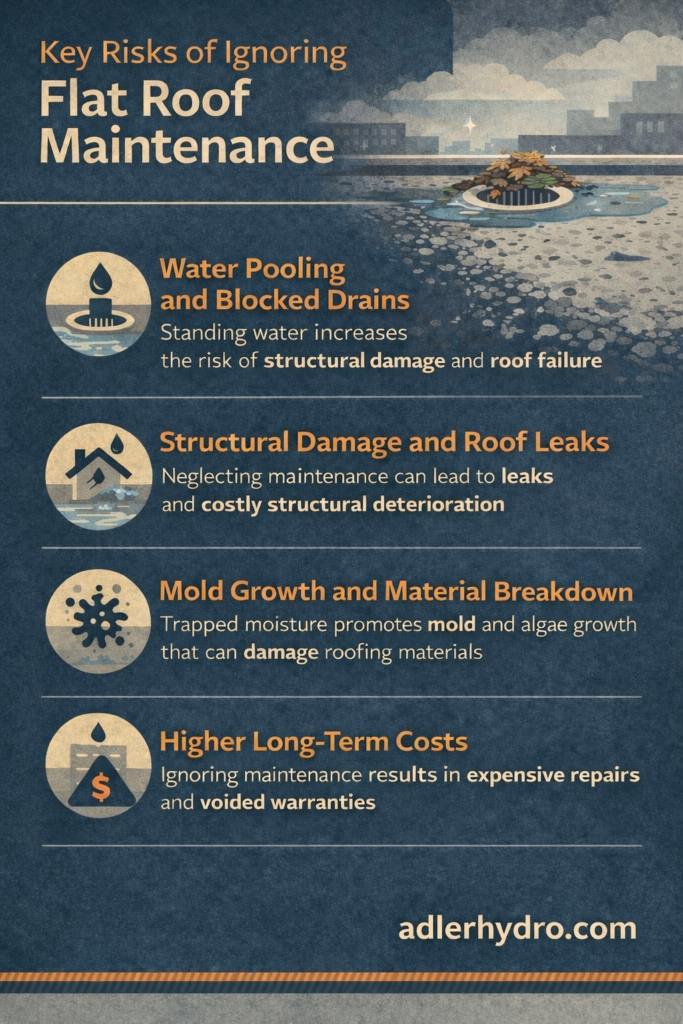
Key Risks of Ignoring Flat Roof Maintenance
Water Pooling and Blocked Drains
One of the most common flat roof problems is standing water caused by clogged drains and gutters. Debris accumulation prevents water from flowing properly off the roof surface, leading to ponding water and additional roof stress.
According to the Federal Emergency Management Agency (FEMA), excess water weight can place additional stress on building structures and increase the risk of damage.
Even properly sloped roofs can experience pooling when drainage systems are blocked.
Professional roof vacuuming services remove debris from:
- Roof drains
- Scuppers
- Gutters
- Low roof areas
- Drainage pathways
Restoring proper drainage helps reduce the risk of roof leaks and structural damage.
Structural Damage and Roof Leaks
Standing water weakens adhesives, membranes, and insulation over time. As moisture penetrates deeper into the roofing system, commercial buildings become more vulnerable to:
- Roof leaks
- Interior water damage
- Structural deterioration
- Reduced energy efficiency
- Roof sagging
The Occupational Safety and Health Administration (OSHA) emphasizes that maintaining safe roof conditions is critical to preventing hazards such as structural failure and water intrusion.
As damage progresses, water can penetrate deeper into the roofing system, leading to more extensive repairs.
The American Society of Civil Engineers (ASCE) also notes that water intrusion and excess structural loading can accelerate infrastructure deterioration over time.
Mold Growth and Material Breakdown
Moisture trapped by debris creates an ideal environment for mold, algae, moss, and bacteria growth. These conditions can damage roofing materials and negatively affect indoor air quality within commercial buildings.
The Environmental Protection Agency (EPA) notes that moisture problems can lead to mold growth, which may affect both building materials and indoor air quality.
Higher Long-Term Costs
Ignoring flat roof maintenance often leads to significantly higher long-term repair costs. Minor drainage problems can quickly become major structural issues when left untreated.
Routine commercial roof vacuuming services help reduce the need for:
- Emergency roof repairs
- Interior water damage restoration
- Mold remediation
- Roof membrane replacement
- Premature roof replacement
According to the Common Ground Alliance, preventative maintenance is one of the most effective ways to reduce infrastructure damage and avoid costly failures.
Warranty and Insurance Risks
Many commercial roofing warranties and insurance policies require proof of routine maintenance and inspections. Failure to clean and maintain a flat roof may result in denied warranty claims or reduced insurance coverage.
Routine roof cleaning and documentation help demonstrate proper roof maintenance practices.
How Professional Roof Cleaning Solves These Problems
Industrial Debris Removal
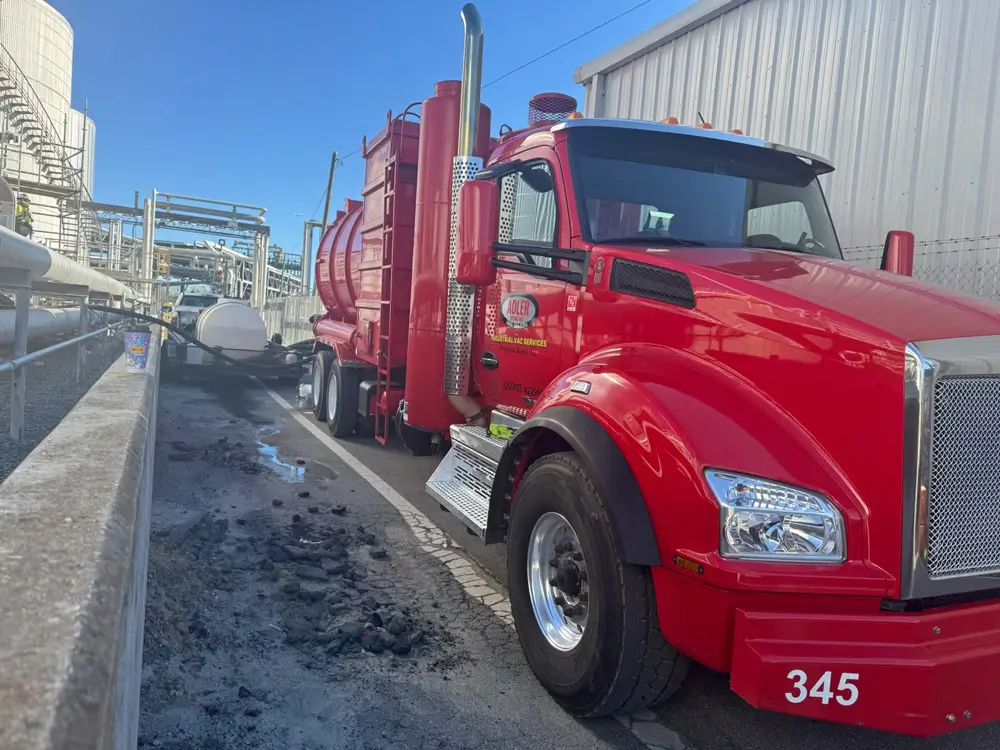
Professional roof vacuuming services use industrial vacuum trucks and high-powered suction equipment to safely remove debris, sludge, gravel, and standing water from flat roofs.
Roof vacuuming services use high-powered systems to lift debris rather than pushing it across the roof.
Improved Drainage and Water Flow
Clearing drains and low areas allows water to flow properly, reducing the risk of ponding and leaks.
Reduced Structural Stress
Removing waterlogged debris reduces weight on the roof, helping prevent sagging and long-term structural issues.
The National Institute of Building Sciences (NIBS) highlights the importance of moisture management and building envelope maintenance in preventing structural deterioration.
Safer Maintenance Process
Professional cleaning reduces the need for manual labor on the roof, improving safety conditions.
The CDC National Institute for Occupational Safety and Health (NIOSH) highlights the importance of reducing fall risks and hazards when working at heights.
Benefits of Roof Vacuuming for Flat Roofs
Routine roof vacuuming services provide several important benefits for commercial properties.
- Safely removes wet and dry debris
- Restores roof drainage systems
- Reduces standing water and ponding
- Helps prevent roof leaks
- Reduces mold and moisture damage
- Extends roof lifespan
- Prepares roofs for inspection and repair
- Improves overall roof safety
Flat roof maintenance services help keep commercial buildings operating efficiently and safely.
How Often Should You Clean a Flat Roof?
Most commercial roofs should be cleaned at least once or twice per year, depending on environmental conditions.
Additional cleaning may be needed:
- After major storms
- In areas with heavy tree coverage
- Following high winds or hailstorms
- In humid climates where mold growth is common
- On older commercial roofing systems
Preventative Maintenance Best Practices
To reduce the risk of flat roof damage:
- Schedule regular roof inspections
- Keep drains and gutters clear
- Remove debris before it accumulates
- Monitor for standing water
- Inspect roofs after major storms
- Schedule professional roof vacuuming services regularly
Using industrial vacuum services helps ensure debris is removed safely and efficiently.
The U.S. General Services Administration (GSA) recommends preventive roof maintenance and drainage management to help reduce long-term building repair costs.
Conclusion: Protect Your Roof Before Problems Start
Neglecting flat roof maintenance can lead to water damage, structural issues, and costly repairs. Regular cleaning and inspection help prevent these problems and extend the life of your roof.
Adler Hydro Vac provides professional roof vacuuming services designed to remove debris, restore drainage, and support long-term roof performance.
To schedule flat roof cleaning and roof vacuuming services, visit Adler Hydro Vac today.
FAQs
How can I tell if my flat roof needs cleaning?
Common signs include standing water, debris buildup, clogged drains, and visible roof damage.
Is it safe to clean a flat roof yourself?
Professional cleaning is recommended to avoid damage to the roof and reduce safety risks.
What is roof vacuuming?
Roof vacuuming is the process of removing debris, gravel, sludge, and standing water from commercial roofs using industrial vacuum equipment and vacuum trucks.
Is professional roof vacuuming safe for flat roofs?
Yes. Professional roof vacuuming services are designed to safely remove debris without damaging roofing membranes or roofing systems.
What happens if water stays on my roof?
Standing water can lead to leaks, structural damage, and mold growth if not addressed quickly.
How often should commercial flat roofs be vacuumed?
Most commercial flat roofs should receive professional roof vacuuming services at least once or twice per year, along with additional cleanings after severe weather events.