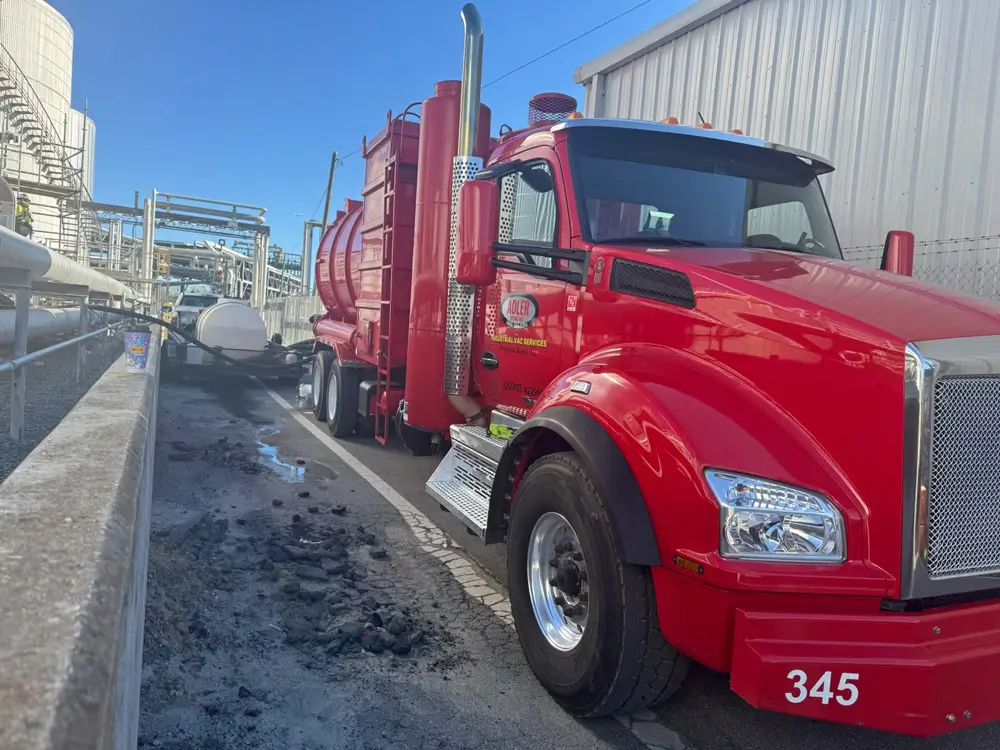
Vacuum trucks are transforming industrial operations by reducing emissions and improving waste management. These machines combine powerful suction with large storage capacities, replacing older methods that require multiple trips and equipment. Here’s why they matter:
Companies like Adler Hydro Vac are leading the way with advanced vacuum truck technology, helping industries operate more responsibly while meeting regulatory requirements. These trucks not only reduce environmental impact but also streamline industrial processes.
Modern vacuum trucks are now equipped with advanced systems and innovative designs that focus on operating more efficiently while consuming less fuel. These improvements not only enhance their performance but also help reduce their environmental impact. With features like fuel-efficient engines, larger waste storage, and environmentally conscious maintenance practices, these trucks are paving the way for cleaner operations.
The engines in today’s vacuum trucks are designed to deliver powerful performance while using less fuel. This results in lower emissions during each operation, making them a more environmentally friendly choice for industrial and municipal tasks.
One standout feature is the increased waste storage capacity. For instance, Adler Hydro Vac’s cutting-edge vacuum trucks can hold up to six times more waste compared to the industry standard. This advancement significantly reduces the number of trips needed to disposal sites, cutting down on transportation-related emissions and saving valuable time.
These trucks also use biodegradable fluids and follow sustainable maintenance routines. This not only ensures optimal performance but also minimizes their impact on the environment, aligning with broader efforts to adopt greener technologies.
Vacuum trucks aren’t just about efficient fuel use – they’re also game-changers in waste management. By improving how waste is sorted, recycled, and disposed of, these trucks help reduce overall environmental impact. Their advanced collection systems and filtration technologies streamline the process, making it easier to separate materials at the source and lighten the load on the planet.
Modern vacuum trucks use suction-based systems that allow operators to collect specific materials with pinpoint accuracy. This means soil, debris, and liquids can be separated during collection. For example, recyclable metals, reusable aggregates, and contaminated materials can either be sorted into different compartments or picked up during specialized runs.
This precision isn’t just about convenience – it also preserves the integrity of materials. Recyclable metal shavings, for instance, can be collected separately to ensure they remain usable. Even the water used in hydro excavation often gets filtered and reused, cutting down on both waste and fresh water consumption.
Vacuum trucks also shine when it comes to handling hazardous materials. During environmental cleanup projects, these trucks can isolate contaminated soil from clean soil. This ensures that only the affected areas require special disposal, while uncontaminated materials can either stay on-site or be repurposed. By refining this separation process, less waste ends up in landfills.
By improving how materials are separated and collected, vacuum trucks significantly reduce the amount of waste that gets dumped in landfills. Mixed waste streams are a big obstacle to effective recycling, but separating materials from the start makes the process far more efficient.
Reducing landfill waste has benefits that go beyond saving space. Organic waste in landfills produces methane, a powerful greenhouse gas. Diverting biodegradable materials like organic debris to composting facilities or treatment centers helps cut down on these emissions. This approach not only conserves resources but also lowers methane output, reducing the overall carbon footprint of operations.
Vacuum trucks also recover valuable materials during industrial cleaning. Spilled chemicals, oils, and other fluids can be collected and sent to recycling facilities instead of contaminating soil that would otherwise need landfill disposal. This doesn’t just cut waste – it also recovers resources that hold economic value.
Hydro excavation systems take things a step further by focusing on water recovery. Instead of creating large volumes of contaminated slurry that need disposal, these systems separate water from solids. The water can then be treated and reused, while the solids are sorted for recycling or proper disposal.
Adler Hydro Vac exemplifies these advanced waste management practices. By combining precise material separation with effective water recovery, they’re not just reducing carbon emissions – they’re also setting a standard for sustainable industrial cleaning. Their efforts highlight how technology and thoughtful processes can make a real difference for the environment.
Vacuum trucks play a crucial role in safely containing and transporting hazardous materials, helping to prevent environmental contamination and limiting the need for extensive cleanup efforts. By securely managing these materials, the risk of accidents that could demand emergency responses – and the extra fuel consumption they entail – is significantly reduced. This approach not only cuts down on carbon emissions but also supports adherence to stringent safety and environmental standards.
Modern vacuum truck operations are bound by rigorous federal and state regulations. Agencies like the Environmental Protection Agency (EPA) and the Department of Transportation (DOT) enforce these rules to ensure that hazardous materials, such as contaminated soil and industrial sludge, are properly labeled, documented, and transported without incident.
“UNWAVERING SAFETY COMMITMENT: Industry-leading safety protocols and continuous training; Full compliance with all regulatory requirements” – Adler Hydro Vac
To keep up with evolving regulations, operators regularly update their certifications and integrate new safety technologies. This ongoing education equips teams with the skills to correctly identify hazardous materials and apply the right handling methods, reducing the likelihood of environmental damage. In addition to meeting regulatory requirements, vacuum trucks are designed with advanced features to further secure hazardous waste during transport.
Sealed containment systems are at the heart of safe hazardous material transport. Modern vacuum trucks employ multiple layers of containment to manage potential leaks effectively. The primary defense is a durable storage tank, while secondary systems are in place to capture any accidental spills, an essential feature when dealing with liquid waste that may emit harmful vapors.
These trucks are also equipped with high-capacity sealed storage, which reduces the number of trips needed and limits exposure to hazardous materials. Fewer trips mean less risk for workers and the environment.
Modern vacuum trucks are transforming industrial operations by cutting carbon emissions and reducing fuel consumption, making cleaner practices more achievable.
Advancements in vacuum truck technology have significantly improved energy efficiency and reduced emissions. With larger capacity tanks, these trucks require fewer trips, directly lowering CO₂ output. Additionally, optimized routing systems and streamlined operations contribute to notable fuel savings. These upgrades offer a clear advantage over older, less efficient methods.
Older methods often demand multiple trips to complete a job, while today’s vacuum trucks can handle the same workload in just one trip. For instance, a task that used to take six trips can now be completed in a single trip, cutting transportation emissions by around 83%.
Modern vacuum trucks also excel in protecting the environment. Traditional excavation methods can disrupt soil and even risk contaminating groundwater, which often necessitates extra cleanup efforts and generates more emissions. In contrast, hydrovac excavation is precise and non-destructive, avoiding these issues altogether.
Another benefit lies in extending equipment life. The gentle, non-invasive cleaning capabilities of modern vacuum trucks help preserve industrial machinery, reducing the need for frequent replacements. This, in turn, minimizes the emissions tied to manufacturing new equipment.
Vacuum truck technology plays a key role in shaping a greener future for industrial operations. As businesses aim to reduce their carbon footprints, adopting smarter and more responsible practices becomes essential.
Take companies like Adler Hydro Vac, for example. Their commitment to integrating environmental responsibility into every aspect of their services highlights how cutting-edge technology can balance profitability with sustainability.
Modern vacuum trucks bring long-term advantages. With larger capacities, they minimize the need for frequent trips, which in turn reduces fuel usage, emissions, and strain on transportation infrastructure. Over time, these efficiencies contribute to meaningful environmental progress.
But the benefits go beyond immediate gains. Technologies like hydro excavation and non-invasive cleaning methods help prevent environmental risks before they arise. By extending the life of equipment and reducing the need for carbon-heavy remediation efforts, these solutions address problems at their root.
By embracing advanced vacuum truck technologies, businesses position themselves as leaders in environmental responsibility. They’re not only complying with current regulations but also preparing for the stricter standards of the future. This forward-thinking approach ensures resilience in an evolving regulatory landscape.
In the years ahead, vacuum trucks will remain a reliable way to cut industrial carbon footprints while maintaining high performance. As more companies adopt these solutions, their collective impact will drive environmental progress, paving the way for cleaner, more sustainable industrial practices across the United States.
Vacuum trucks are essential in reducing the environmental impact of industrial activities. By incorporating energy-saving systems and cutting-edge technologies, these vehicles are built to deliver top-notch performance while keeping fuel usage and emissions in check.
Adler Hydro Vac goes beyond the standard by providing advanced vacuum trucks for tasks like hydro excavation, industrial cleaning, roof vacuuming, and environmental remediation. Their equipment is designed with a focus on safety, efficiency, and eco-conscious practices, enabling industries to operate more responsibly and lower their environmental footprint.
Modern vacuum trucks come equipped with state-of-the-art technology and features that boost their efficiency in handling waste while consuming less energy. With advanced engines, precise suction mechanisms, and intelligent controls, these trucks are designed to lower fuel usage and emissions without compromising their performance.
Companies such as Adler Hydro Vac exemplify a dedication to sustainable practices by providing high-performance vacuum trucks and services designed for safe and efficient use. These trucks are engineered to reduce their environmental footprint while improving workflows in industries such as construction, utilities, and manufacturing.
Vacuum trucks are built with specialized systems to handle hazardous materials securely, meeting stringent safety and environmental standards. These trucks rely on sealed containment units and high-powered suction to collect, transport, and dispose of materials without risking leaks or spills.
Adler Hydro Vac emphasizes safety and environmental responsibility by using cutting-edge vacuum trucks for tasks like hydro excavation and industrial cleaning. Their focus on precision and adherence to regulations has earned them a reliable reputation among industries that depend on the safe management of sensitive materials.