Line jetting and vacuum excavation are two advanced techniques used together for maintaining underground utilities and infrastructure. This combination offers a safer, faster, and more precise method for clearing blockages and protecting sensitive systems. Key points:
This dual-force approach is transforming underground utility maintenance by ensuring thorough cleaning while prioritizing safety and efficiency.
Line jetting uses high-pressure water to clear out tough blockages and debris in underground systems. It’s a key method for keeping America’s extensive network of pipes, drains, and utility lines running smoothly, ensuring cities and industries operate without disruption.
At its core, line jetting relies on water streams under high pressure to clean with precision and power. These systems operate at pressures ranging from 5,000 PSI to an intense 40,000 PSI, strong enough to break through even the most stubborn clogs.
Here’s how it works: water is propelled through specially designed nozzles at high pressure. These jets penetrate deep into blockages, breaking apart materials like grease, debris, and mineral deposits that build up over time. This method is non-invasive, meaning it cleans effectively without requiring confined-space entry or the use of harsh chemicals.
The pressure can be adjusted depending on the task at hand. Routine cleaning typically requires around 5,000 PSI, while more challenging blockages may need the full power of 40,000 PSI.
This technique plays a vital role in maintaining municipal and industrial systems. In city infrastructure, line jetting clears grease and debris from sewer lines, while storm drains and catch basins benefit from its ability to remove sediment, leaves, and other materials that cause flooding during heavy rains.
In industrial settings, such as manufacturing plants, chemical facilities, and food processing operations, line jetting helps maintain proper flow rates and prevents contamination. Commercial spaces like shopping centers, office buildings, and hotels also rely on this method for routine drain maintenance.
The equipment behind line jetting is as impressive as the process itself, often integrated into industrial vacuum trucks for a complete cleaning solution.
At the heart of the system is a high-pressure pump, which generates the force needed for effective cleaning. These pumps allow for customizable PSI and flow rates to match specific cleaning needs. Specialized nozzles are another critical component: some focus the water stream to tackle tough blockages, while others create a wider spray for general cleaning tasks. High-pressure hoses, designed to handle extreme pressures, are flexible enough to navigate intricate pipe systems.
When combined with vacuum systems, line jetting becomes even more efficient. The high-pressure water breaks apart blockages, and the vacuum immediately removes the loosened debris, leaving the system clean and clear.
With decades of refinement, line jetting has become an essential tool in underground maintenance. Its precision and power make it a go-to method for tackling even the toughest cleaning challenges. Plus, when paired with vacuum excavation, it creates a dual-force approach that maximizes cleaning efficiency and ensures systems are primed for optimal performance.
After line jetting clears blockages with high-pressure water, vacuum excavation steps in to carefully remove the loosened debris. This method is a reliable, non-destructive approach widely used in underground utility work. Unlike line jetting, which focuses on powerful water streams, vacuum excavation is designed to gently loosen and extract material without damaging nearby infrastructure. This combination of precision and efficiency ensures a clean and controlled excavation process.
The process is fairly simple: high-pressure water or compressed air is used to break up soil or debris, and then a strong vacuum system removes the material. This dual-action approach allows for accurate excavation while safeguarding surrounding utilities and structures. It’s this precision that makes vacuum excavation a go-to solution for a variety of projects across the U.S.
In the United States, vacuum excavation is employed for tasks like utility locating, potholing, daylighting, and micro trenching. Utility companies frequently use it to safely uncover underground systems for maintenance or inspection. Similarly, telecommunications providers depend on this method to carve out narrow, minimally invasive trenches in crowded urban areas, where precision is key.
Because it’s a non-invasive technique, vacuum excavation significantly reduces the risks associated with traditional digging methods. Its precise operation minimizes the chance of damaging underground utilities, which not only protects critical infrastructure but also improves overall safety on the worksite.
Pairing line jetting with vacuum excavation creates a powerful solution for underground maintenance tasks, especially for complex utility and infrastructure projects in the U.S. This combination streamlines operations and delivers exceptional results.
When used together, these methods create a highly efficient cleaning process. Line jetting starts by breaking apart stubborn blockages, debris, and hardened materials using high-pressure water. Vacuum excavation then steps in to remove the loosened debris quickly and thoroughly.
This seamless coordination eliminates the need for frequent equipment changes and reduces downtime. Operators can tackle tough cleaning jobs in one continuous operation, cutting down on repeat visits and rework. The result? Longer-lasting maintenance outcomes and fewer disruptions. These workflow improvements also pave the way for cost savings and better project efficiency.
| Method | Cleaning Efficiency | Safety Level | Cost-Effectiveness | Project Time |
|---|---|---|---|---|
| Line Jetting Alone | Good for breaking blockages | Moderate – high pressure risks | Moderate – may require follow-up | Longer – debris remains |
| Vacuum Excavation Alone | Limited on hardened materials | High – non-destructive | Lower – struggles with tough debris | Longer – compacted debris |
| Combined Dual-Force | Excellent – complete cleaning | Highest – controlled process | High – single operation completion | Shortest – efficient workflow |
This table highlights how the combined approach outperforms either method used alone.
By merging the strengths of line jetting and vacuum excavation, operators can improve efficiency and protect critical infrastructure. This method not only enhances project outcomes but also reduces overall costs.
The controlled nature of this approach aligns with OSHA safety standards, minimizing workplace hazards and helping operators avoid delays or compliance issues. Complete debris removal also reduces the risk of recurring blockages, keeping utility systems operational for longer periods and cutting down on emergency repairs.
In urban areas like New York, Chicago, and Los Angeles, where underground infrastructure is especially intricate, the precision of this method is invaluable. It allows operators to work safely in these challenging environments while meeting the high expectations of municipal contracts.
Additionally, the combined method saves money by reducing the need for multiple site visits, limiting equipment mobilization, and requiring fewer workers. Crews can handle more projects without increasing labor, boosting overall productivity and efficiency.
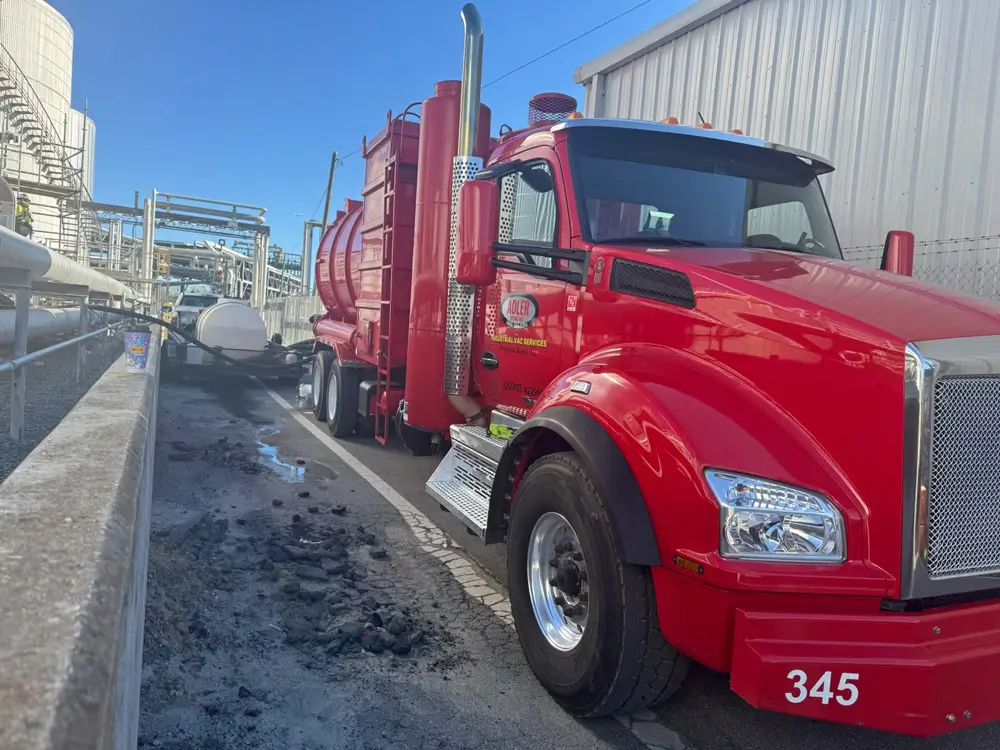
The dual-force method relies on advanced truck-mounted equipment that combines high-pressure water jetting with powerful vacuum extraction. This setup is designed for efficient underground maintenance. The high-pressure water systems are the cornerstone of line jetting operations, offering adjustable pressure and flow rates to tackle various cleaning tasks. Meanwhile, modern industrial vacuum trucks provide strong suction and effective debris handling. These trucks often feature hydrovac excavation systems, which pair water delivery with immediate vacuum extraction to break down and remove materials efficiently.
Adler Hydro Vac brings over 40 years of experience in underground and utility cleaning projects across the United States. Their fleet includes 22 state-of-the-art vacuum trucks, each boasting a debris-holding capacity six times larger than the industry standard. Their water blasting equipment operates at pressures ranging from 5,000 psi to an impressive 40,000 psi, making it suitable for a wide variety of cleaning challenges.
Safety is a key focus of Adler Hydro Vac’s operations. Their innovative systems eliminate the need for confined space entry, reducing risks for workers. Additionally, their hydrovac excavation services use non-destructive technology, making them ideal for projects near sensitive utilities. This allows operators to work safely around critical infrastructure without causing damage.
Adler Hydro Vac has successfully applied its dual-force approach in various settings across the United States. From municipal utility maintenance to utility excavation for construction projects, their methods showcase the efficiency and adaptability of combining line jetting with vacuum excavation.
These accomplishments highlight the effectiveness of Adler Hydro Vac’s methods and set the stage for evaluating the broader impact of the dual-force approach.
The dual-force approach combines the power of line jetting and vacuum excavation to create a seamless and efficient solution for underground cleaning. By integrating high-pressure water blasting with hydrovac excavation, this method simplifies operations by breaking down and removing debris in a single process. It’s a practical solution that not only boosts efficiency but also adheres to strict safety standards and regulatory requirements – essential factors for industries across the U.S.
Adler Hydro Vac embraces the advantages of this dual-force approach, offering a one-stop solution for high-pressure water blasting (line jetting) and hydrovac excavation. With decades of experience, they deliver a thorough and reliable service designed to handle even the most complex cleaning tasks.
Using advanced equipment proven effective across a variety of projects nationwide, Adler Hydro Vac ensures precision and scalability to meet diverse needs. Their commitment to safety and compliance is evident through rigorous training, certifications, and strict protocols that protect workers and guarantee consistent results. This dedication highlights how the dual-force approach delivers real-world results, making it a transformative solution for industries requiring effective and safe cleaning methods.
The pairing of line jetting and vacuum excavation provides an effective and safe way to maintain underground utilities. Line jetting relies on high-pressure water to clear out tough debris and blockages, while vacuum excavation carefully removes the loosened material without harming nearby infrastructure.
This combination reduces the risks associated with manual digging or using heavy machinery, making it a safer option for underground systems. It’s particularly beneficial for industries managing intricate underground maintenance, as it delivers accuracy, speed, and improved safety for both workers and the surrounding environment.
High-pressure line jetting stands out as a powerful solution for tackling tough blockages and debris that other methods often can’t handle. It’s especially effective at breaking down grease buildup, mineral deposits, tree roots, and compacted soil that clog underground pipes and utility lines. The intense water pressure not only dislodges these stubborn materials but also flushes them away completely.
This technique shines in scenarios where precision and thoroughness are essential. For instance, it can clear debris from narrow or complex pipe systems without causing any damage. Plus, its ability to work with a variety of pipe sizes and materials makes it a flexible option for keeping underground infrastructure in top shape.
Vacuum excavation is often referred to as a non-destructive method because it relies on air or water pressure to gently break apart soil, which is then removed using a high-powered vacuum. This approach significantly reduces the risk of damaging underground utilities like gas lines, water pipes, or electrical cables. Unlike heavy machinery or sharp tools, which can pose a threat to buried infrastructure, vacuum excavation prioritizes precision and care.
Some standout benefits of this method include accuracy, safety, and speed. By exposing underground systems with precision, it minimizes the chance of expensive repairs, ensures a safer environment for workers, and helps complete projects more quickly. This makes it a go-to choice for industries that need to manage and maintain intricate underground networks.